
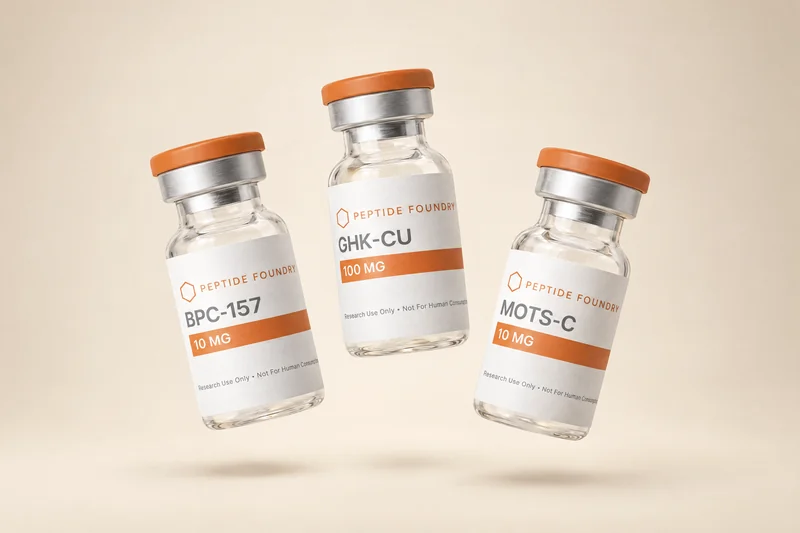
PEPTIDE FOUNDRY / THE ENVIRONMENT MATTERS
Small particles. Higher standards.
What does ISO 5 mean
in a cleanroom?
ISO 5 is an ISO 14644-1 air-cleanliness class: at most 3,520 particles ≥0.5 µm per cubic meter of air. That one sentence is the definition — airborne particles in a classified area, not peptide purity, not lot identity, and not product approval. Peptide Foundry materials are for laboratory research use only.
Walk through an illustrated ISO 8 → ISO 7 → ISO 5 progression and see why the air around a vial is talked about separately from analytical proof.
Step inside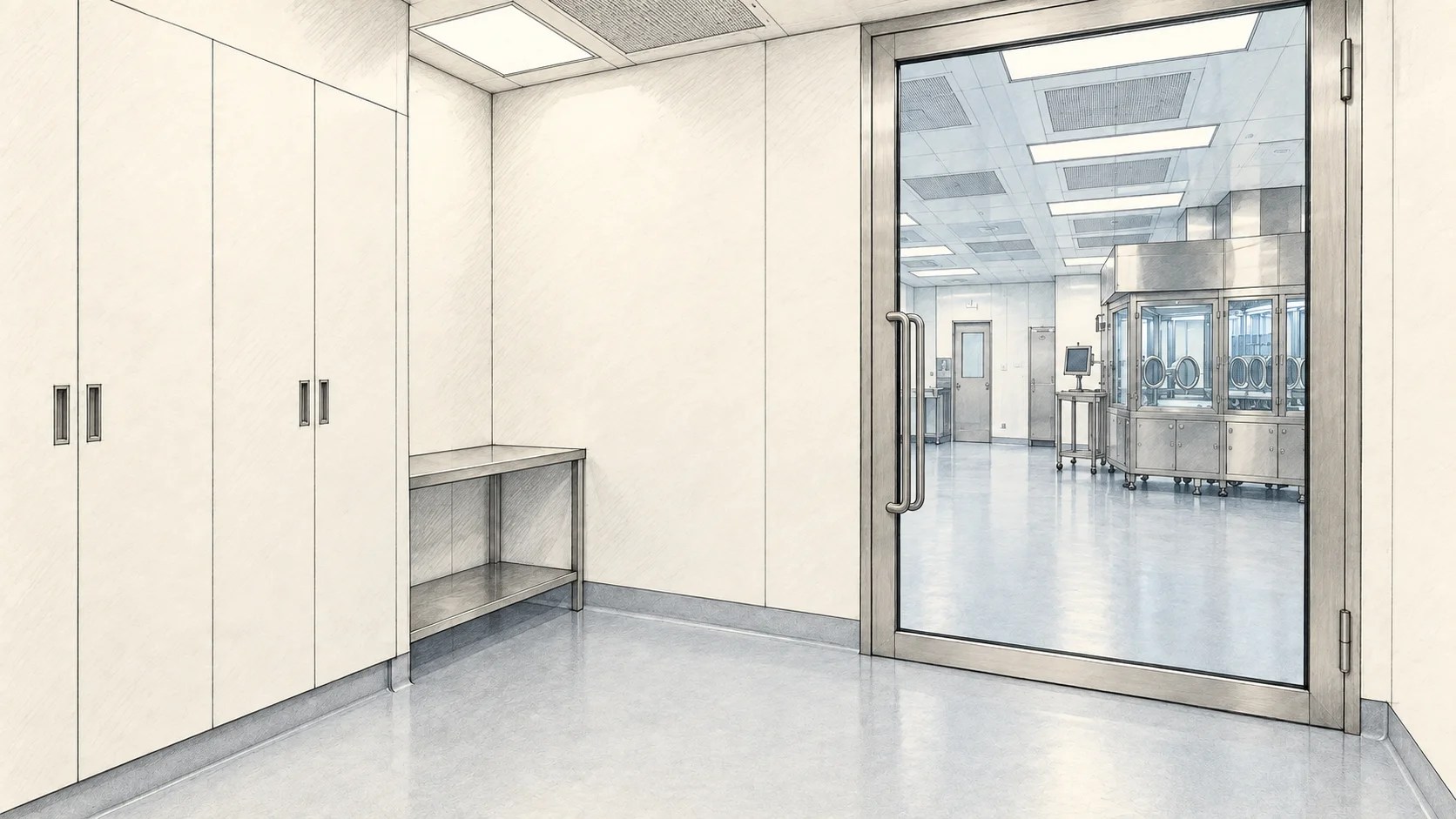
01 / THE SUPPORTING AREA
Clean starts
before the vial.
ISO is the International Organization for Standardization. Its ISO 14644-1 standard classifies air by the concentration of airborne particles.
In this illustrated ISO 8 area, entry procedures, cleanable surfaces and controlled handling begin the journey toward cleaner air.
The lower the class number, the stricter the particle limit.
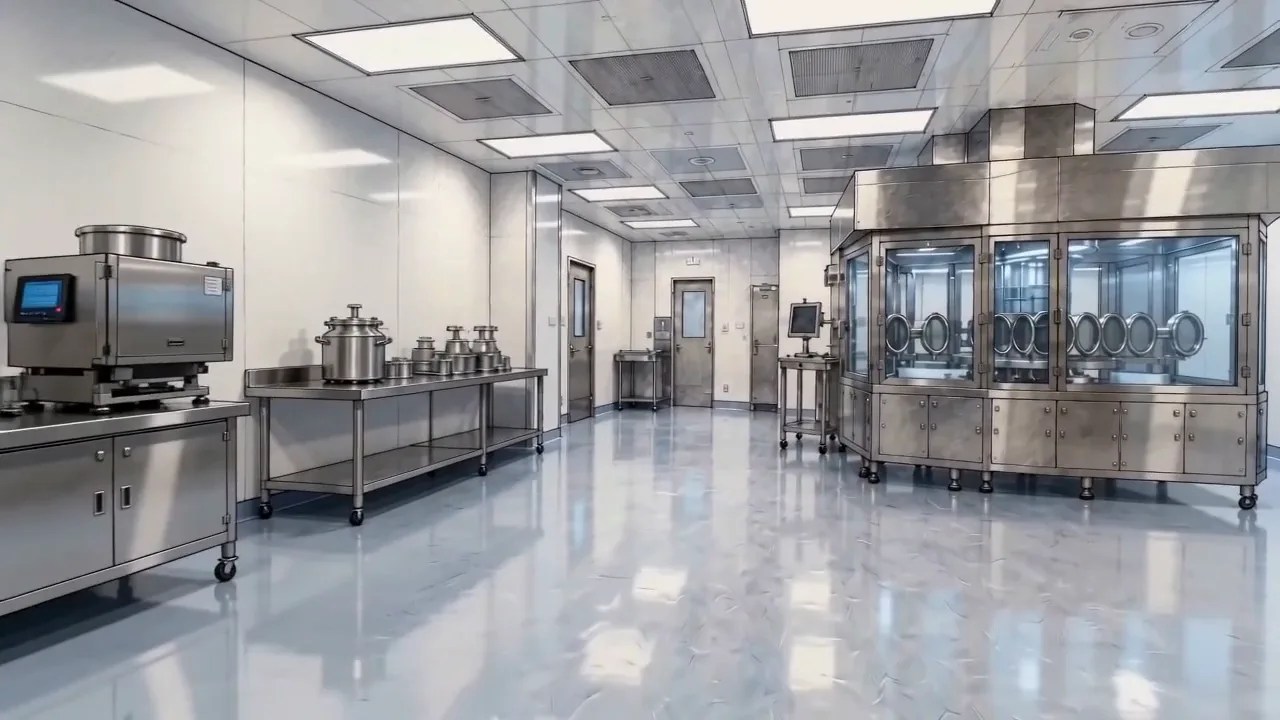
02 / THE PROCESSING ROOM
Another layer.
Less in the air.
ISO 7 tightens the limit. At the same particle size, it allows one-tenth the concentration permitted in ISO 8.
Filtered air, controlled entry and cleaning work together to protect the surrounding processing environment. Particle measurements establish whether an area meets its class.
10× lower permitted concentration than ISO 8.*
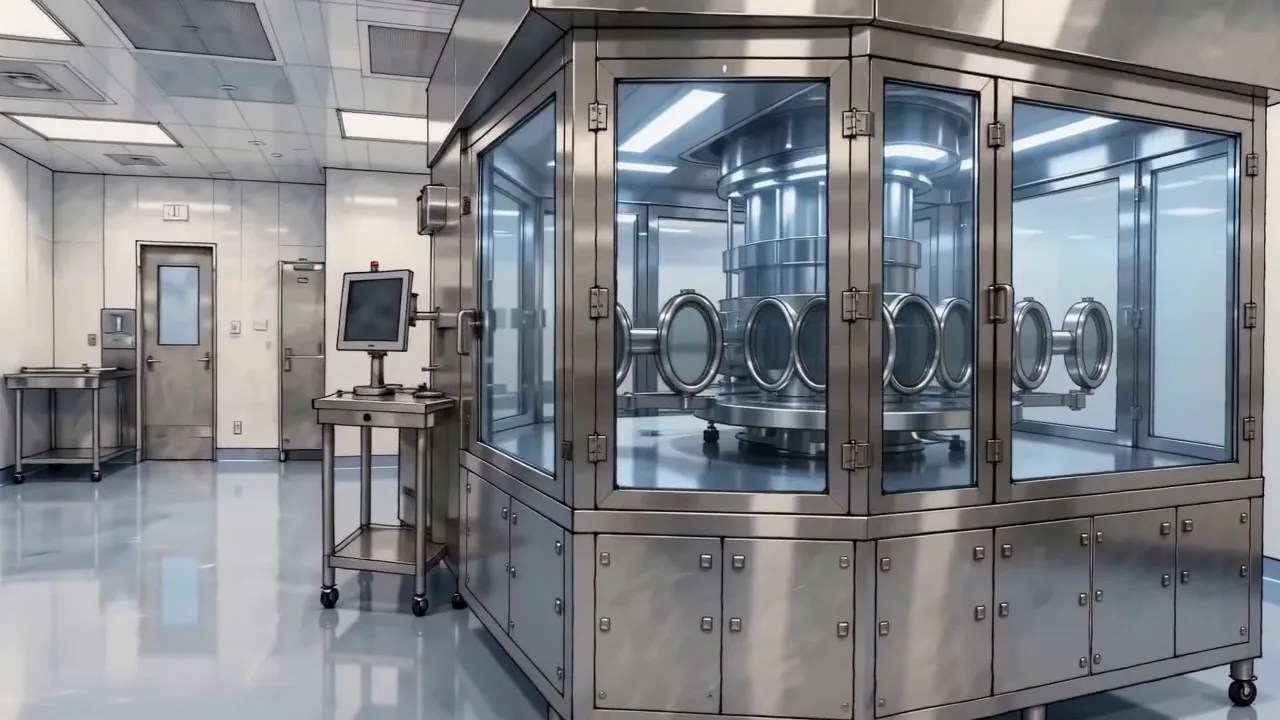
03 / THE CRITICAL WORK ZONE
ISO 5 (ISO 14644-1 Class 5):
the protected work zone.
ISO 5 can be a protected filling zone inside a larger room. Here, the illustration brings you up to an enclosed workstation.
HEPA-filtered airflow and a controlled work zone help reduce exposure to airborne contamination while materials are handled. The enclosure’s actual performance must be verified.
1,000× lower permitted concentration than ISO 8.*
UNDERSTAND THE NUMBER
Same particle size.
A very different limit.
These numbers compare the maximum permitted concentration of particles measuring 0.5 micrometers or larger in one cubic meter of air.
Supporting environment
Cleaner processing background
Protected critical zone
*Classification limits at ≥0.5 µm—not measured readings from this facility. The 10× and 1,000× comparisons apply to these limits, not to peptide purity or overall product quality. Classification also records the tested occupancy state, such as “at rest” or “operational.” Actual layouts vary. Older U.S. Federal Standard 209E “Class 100” language roughly overlaps ISO 5 at 0.5 µm — naming history only, not a second standard Peptide Foundry is claiming.
WHAT THIS MEANS FOR YOUR RESEARCH
Where ISO 5 sits in
peptide manufacturing
(illustrative).
In educational process maps, supporting rooms often start at a looser air class (illustrated here as ISO 8), processing backgrounds tighten (ISO 7), and critical fill/handle zones aim for ISO 5. That progression is about airborne particles — not a certificate of peptide purity and not a claim about Peptide Foundry’s floor plan.
Control the process
Cleanroom controls help limit opportunities for airborne contamination. They support careful handling; an ISO number alone is not proof of sterility. Air classification is also not the same as a manufacturing quality system — see what cGMP compliant means.
Verify the material
Identity, purity and quantity require separate analytical testing. Start with how to read a research-peptide COA, then review the lot-specific Certificate of Analysis and the methods and results it actually reports.
Weight manufacturing claims
Facility and process language (including cGMP or USA claims) answers different questions than lot analytics. Use the USA research-peptide vendor criteria checklist when evaluating those claims.
Make quality inspectable
After the literacy pages, explore Peptide Foundry’s products and available batch reports. Assess the evidence for the specific peptide and lot you are researching.
How to read a research-peptide COA · What cGMP compliant means · Vendor criteria
Explore peptides & batch reportsA FEW THINGS WORTH KNOWING
Beyond the room.
Does ISO 5 mean 99.9% peptide purity?
No. ISO 5 describes airborne-particle concentration in a classified area. Peptide purity is a separate laboratory measurement; one cannot be inferred from the other. For lot analytics literacy, see how to read a research-peptide COA.
Is every room in a facility ISO 5?
Not necessarily. Different areas can have different classifications. A protected ISO 5 work zone may sit inside an ISO 7 room. This tour illustrates one possible progression, not a verified floor plan.
Does cleanroom classification mean a product is approved for human use?
No. Air classification does not establish product approval, clinical safety or suitability for human use. Peptide Foundry products are for laboratory research use only.
Is ISO 5 the same as cGMP?
No. ISO 5 describes an airborne-particle cleanliness class under ISO 14644-1. cGMP addresses a broader manufacturing system—personnel, procedures, equipment, and records. Explore the cGMP walkthrough →
Learn more: ISO 14644-1: air cleanliness classification.